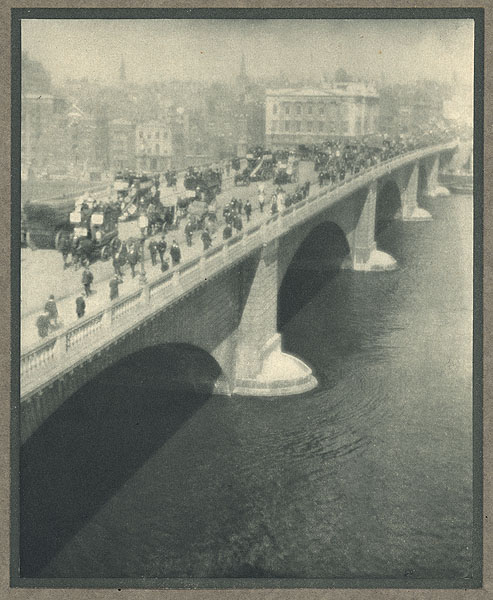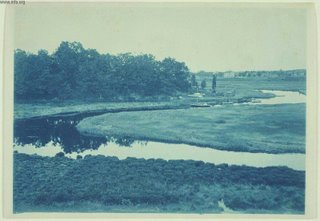
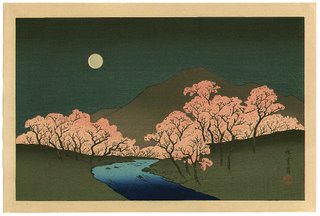
it's difficult for our eyes to even see it now, but the transition in art from depicting the literal to depicting the subjective was wildly revolutionary (as we've already seen). and this goes for photography as well as painting. for many years after their introductions both painting and photography were 'required' to reflect reality 'accurately.' at least that was true in the west.
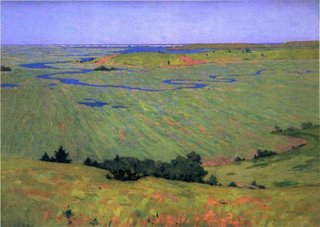

in japan, it was different. it was just understood that the reality the artist produced was what he made of it. when arthur wesley dow suddenly realized this, supposedly while reading a book on japanese prints at the fine arts museum library in boston, it changed his work forever. he felt that
this is what he had been looking for, what his work had been needing. dow realized that he did not want to be copying the prints, something he came to criticize whistler for doing, but rather creating his own style using the principles he had learned from viewing the japanese work.
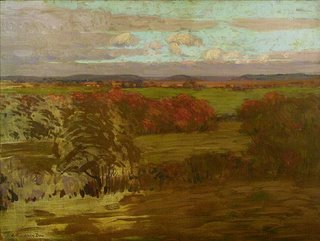
it is our loss that dow spent far more time teaching, from his school in ipswitch to columbia, to the pratt institute in new york, with many stops in-between, than he did making art, and yet he bequeathed us the wonders of the work of his students.

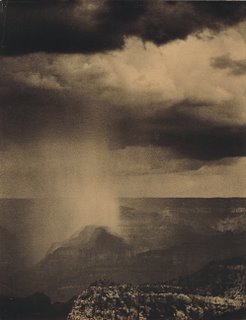
one student, alvin langdon coburn, wasn't a true beginner when he came to ipswitch in 1903. (he would go
on to begin to photograph many of the '
men of mark' in europe the following year). he and dow became more than strictly student and teacher, as they twice went to the grand canyon together to shoot photographs, or paint.
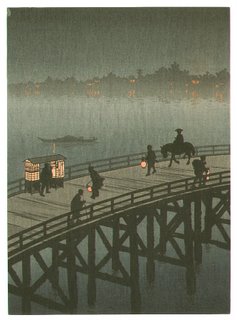
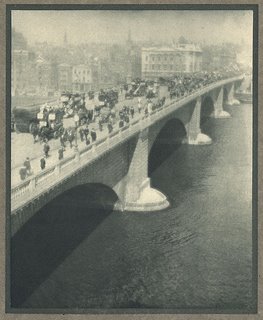
coburn said of dow's ipswich school, "we were taught painting, pottery, and woodblock printing, and i also used my camera, for dow had the vision, even at that time, to recognize the possibilities of photography as a medium of personal artistic expression. i learned many things at his school, not least an appreciation of what the orient has to offer us in terms of simplicity and directness of composition....i think that all of my work has been influenced to a large extent and beneficially by the oriental background, and i am deeply grateful to arthur dow for this early introduction to its mysteries." the world was learning this from the japanese artists who, until being 'taught' otherwise by the westerners they were so enthusiastically trying to emulate, did not make a distinction between 'crafts' and 'art.' in europe the nabis embraced this philosophy (more on this later); additionally part of this was establishing photography's place as a fine art as well.
many thanks to
pinholeman for turning me on to coburn!!
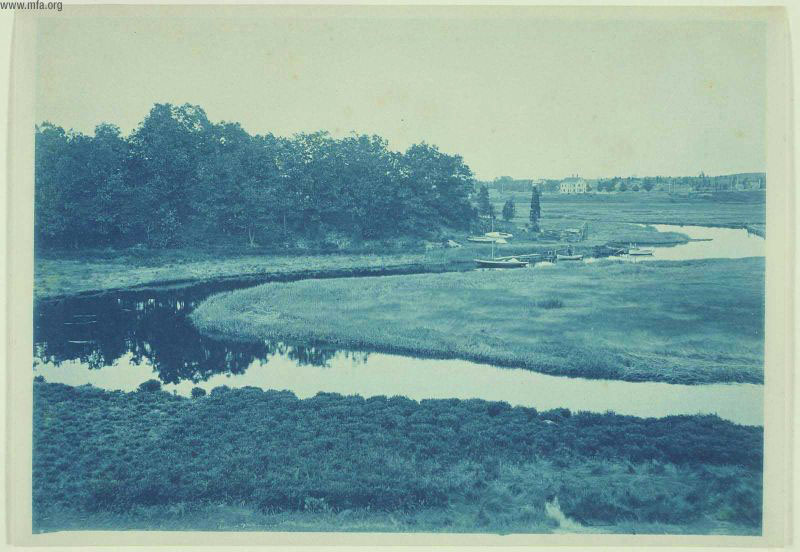
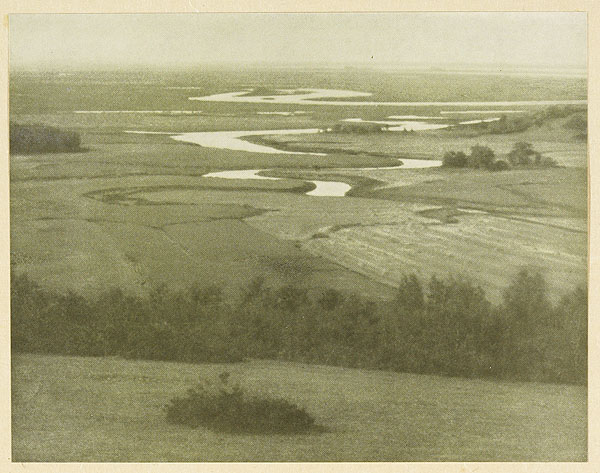
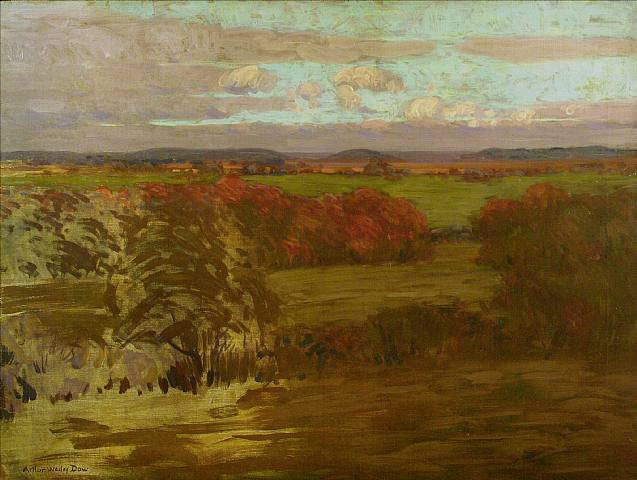
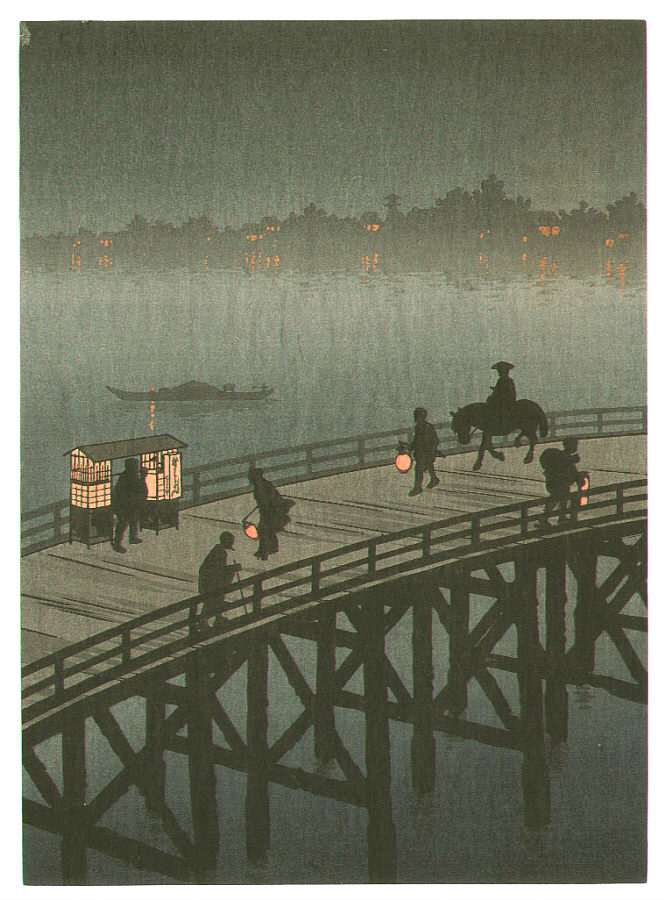
picture info: top right: 'salt marsh' dow; top left: 'moon over cherry trees' hiroshige. 2r: 'the blue dragon' dow's painting of the scene out his studio door; 2l: 'the dragon' coburn's photo of the same spot. (here i've stuck in dow's 'ipswitch meadows' because it struck me that this was essentially the same painting as his 'grand canyon'!) 3r: 'grand canyon' dow; 3l: 'grand canyon' coburn. 4l: 'oh-hashi bridge' koho shoda; 4r: 'london bridge' coburn.


 an element always interesting to consider, but never wholly knowable, is intent. even the person who believes they know their own intent may not. so how to speak of the international flow and flux of art and ideas.

 to what extent, and i'm sure it was some, was the west's fascination with japan and all things japanese a search for (the illusion of) the simpler life. the industrial revolution had made cities louder and dirtier; how attractive then the 'peaceful'

 even the japanese, meiji period on out, designed to that desire in the west, so here we have japanese art from that period, plus several, again, of the pictorialist photographers who, along with their leader stieglitz, were busy making a new branch of art.